Patient Education
CO2 Laser Resurfacing Recovery: A Day-by-Day Timeline
What to expect from day 1 through month 3 after fractional CO2 laser resurfacing — normal symptoms, skincare tips, and signs that warrant a call to the office.
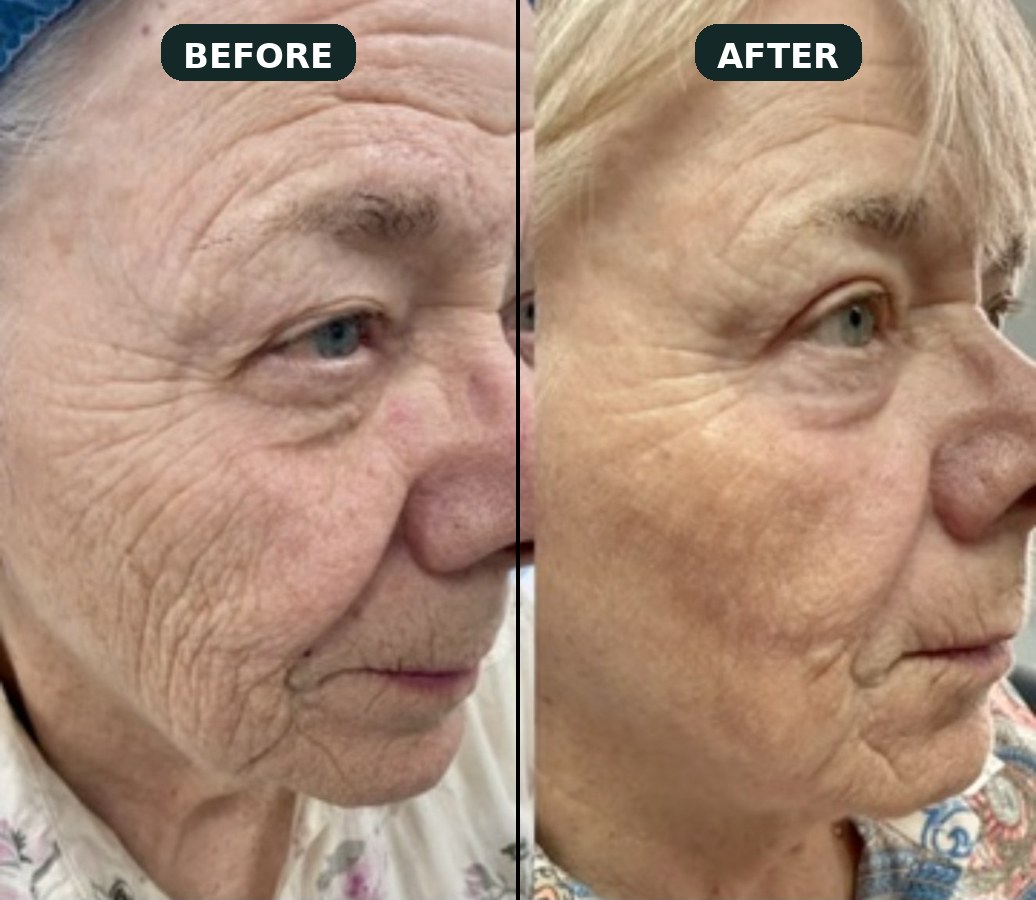
How long does CO2 laser recovery take overall?
Most patients experience the most visible healing — redness, swelling, and peeling — over the first 7 to 10 days after fractional CO2 laser resurfacing. A pink or rosy skin tone can persist for several additional weeks, and the deeper collagen-building process that produces the treatment's full benefit continues for 3 to 6 months. The exact pace depends on the treatment depth Dr. Malouf selects for your skin and goals, so lighter treatments generally heal faster than more aggressive full-depth passes.
Day 1: What to expect immediately after treatment
On the day of treatment, skin appears red or bronze-toned, and mild swelling is common, especially around the eyes if that area was treated. An occlusive ointment is applied to keep the skin protected, and detailed aftercare instructions are provided before you leave. Most patients describe a sensation similar to sunburn. Antiviral medication, if prescribed, should be taken as directed to reduce the risk of viral reactivation during healing.
Day 2–3: What happens as swelling peaks
Swelling often peaks around day 2, particularly if the eyelids or perioral area were treated. Skin may ooze small amounts of clear fluid — this is a normal part of the skin's healing response, not a sign of infection. Continue gentle cleansing and reapplication of the ointment or moisturizer as instructed. Sleeping with your head elevated can help minimize swelling.
Day 4–7: The peeling stage
This is when the visible peeling stages of CO2 laser recovery begin. Around day 3 to 4, the outer skin layer starts to shed in small flakes or sheets, revealing pink, tight-feeling new skin underneath. Peeling typically continues in patches through day 7. It's important not to pick or manually remove peeling skin — letting it shed naturally reduces the risk of scarring or uneven pigmentation. By the end of this window, most patients have fully re-epithelialized skin, meaning the surface barrier has closed.
Week 2: Redness fades and makeup returns
Once the skin has finished peeling, most patients can resume wearing makeup, generally around day 7 to 10, once the office confirms healing is on track. Redness is still common during week 2 and can range from a subtle pink to a more noticeable flush depending on treatment depth and individual healing. Mineral-based makeup is often recommended initially since it's less likely to irritate healing skin.
Week 3–4: Settling in
By weeks 3 and 4, most swelling has resolved and redness continues to fade toward your normal skin tone. Skin texture often looks noticeably smoother during this period as the initial resurfacing effect becomes visible, even though deeper collagen remodeling is still underway beneath the surface.
Month 2–3: Continued collagen remodeling
The CO2 laser's deeper benefit — new collagen production — unfolds gradually over the two to three months following treatment. Fine lines, texture, and skin laxity continue to improve during this period even though the skin looks outwardly healed. This is why Dr. Malouf and most laser specialists recommend waiting at least 3 months before judging the final result.
When are CO2 laser results final?
Most patients see their fullest results around the 3 to 6 month mark, once collagen remodeling has largely completed. Some subtle tightening and textural improvement can continue beyond that window as the skin's own repair processes wind down.
What skincare and sun protection should I follow during recovery?
During the peeling phase, stick to the gentle cleanser and moisturizer recommended by the office — avoid retinoids, exfoliating acids, and other active ingredients until the skin has fully healed. Daily broad-spectrum sunscreen is essential once the skin has re-epithelialized, since newly resurfaced skin is more vulnerable to sun-induced pigmentation. Strict sun avoidance, including wide-brimmed hats, is recommended for at least several weeks, and ongoing diligent sun protection helps protect your results over the long term.
What downtime tips make recovery easier?
Plan to avoid strenuous exercise, saunas, and swimming for about a week, since sweating and submersion can irritate healing skin. Keep your head elevated while sleeping for the first several nights to reduce swelling. Cool compresses can ease discomfort in the first day or two. Most patients plan time off work or social commitments for about a week, particularly if a full-face or aggressive treatment was performed.
What symptoms are normal, and what are red flags?
Redness, swelling, oozing clear fluid, tightness, and itching during the peeling phase are all expected. Symptoms that are not expected — and should prompt a call to the office — include increasing pain after the first 48 hours, spreading redness accompanied by warmth or fever, pus-like or foul-smelling drainage, or blistering that looks different from the uniform peeling pattern. These can indicate infection or another complication that needs prompt evaluation.
How does CO2 laser recovery compare to gentler options?
Because fractional CO2 resurfacing is an ablative treatment, its downtime is longer than non-ablative options like an IPL photofacial, which typically involves little to no visible peeling. Patients who want a gentler option with no downtime, or who are treating primarily pigmentation and redness rather than deep texture and wrinkles, may be better suited to IPL. Dr. Malouf can help determine which approach fits your skin and schedule.
Frequently asked questions
How long does CO2 laser take to heal?+
Visible surface healing — redness and peeling — typically resolves over 7 to 10 days. Pink or rosy skin tone can linger for several weeks to a few months, and full collagen remodeling continues for 3 to 6 months after treatment.
What are the CO2 laser peeling stages?+
Peeling generally begins around day 3 to 4 as the outer skin layer sheds, continues in patches through about day 7, and is usually complete by day 7 to 10. Skin often looks pink and tight underneath the peeling layer — this is a normal part of resurfacing, not a complication.
When can I wear makeup after CO2 laser resurfacing?+
Most patients can resume makeup once the skin has fully re-epithelialized, typically around day 7 to 10, once Dr. Malouf's team confirms the skin barrier has closed.
Is redness after CO2 laser normal?+
Yes. Redness is an expected part of the healing process and typically fades over several weeks. Deeper or more aggressive treatments may produce redness that lasts longer than a lighter treatment.
When will I see final results from CO2 laser resurfacing?+
While initial improvement is visible as swelling and redness resolve, new collagen continues forming for months. Most patients see their fullest results at the 3 to 6 month mark.
What symptoms after CO2 laser should prompt a call to the office?+
Contact the office for increasing pain after the first 48 hours, spreading redness with warmth, fever, pus-like drainage, or any blistering pattern that looks different from the expected uniform peeling — these can be signs of infection or another complication that needs evaluation.
Related Reading
Explore these procedures in depth
Take the next step
Considering CO2 laser resurfacing?
Book a consultation with Dr. Malouf to discuss treatment depth, downtime, and what to expect for your skin.